
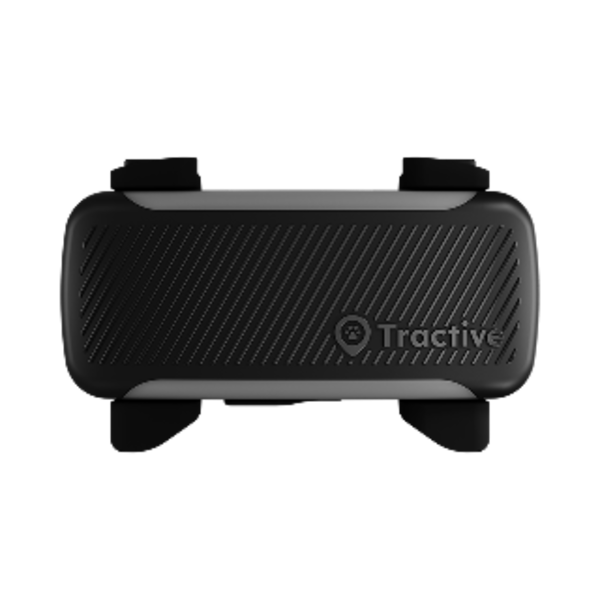
“GPS dog tracker” describes the location sensor, but GPS alone is not enough for remote recovery. A tracker also needs a way to send that location back to the owner. That difference explains why real-time pet trackers usually require cellular service and a subscription.
1. Start with coverage, not hardware price
Cellular trackers combine GPS with LTE or another mobile network. If the dog escapes into a place where the tracker has no usable network, updates can be delayed even when satellites are visible. Check the tracker’s supported country/network coverage in the places the dog actually lives, hikes, hunts, boards, or travels.
Tractive operates across many countries with supported mobile coverage; Petcube’s current US-facing tracker relies on LTE availability. Fi products are also market-specific. Do not assume a product sold online has full service in every country.
2. A Bluetooth tag is not the same recovery architecture
AirTag-style devices can report a location when compatible phones or devices pass nearby. That can work well in dense neighborhoods but is not the same as a pet tracker with its own cellular connection. A dog that runs into open countryside may be far from the crowdsourced network that makes a Bluetooth tag useful.
Bluetooth tags can still be a useful secondary locator, but compare them honestly with dedicated cellular trackers rather than calling them equivalent because both show a map.
3. Battery claims must be tied to operating mode
Manufacturers achieve long battery life by reducing expensive GPS/cellular activity when the dog is at home or inside a known Wi-Fi zone. Tractive DOG 6 advertises up to 14 days with Power Saving Zones. Petcube advertises up to 30 days with Power Save Zone enabled. Fi Series 3+ advertises up to three months, while Fi’s own support material shows that high outdoor activity can reduce that dramatically.
Lost or live modes consume more power because location updates happen more frequently. Compare both normal home-use runtime and emergency-tracking behavior.
4. Escape alerts should be configured before the escape
Virtual fences are only useful if the home zone is accurate and notifications reach the owner. Set the boundary, walk the tracker across it while the dog is safely controlled, and confirm that the alert arrives. A fence drawn too tightly can create constant false alarms; one drawn too widely can delay the first warning.
5. Size and attachment affect whether the tracker stays on the dog
Tractive DOG 6 weighs 39 g and is recommended from 4 kg / 8.8 lb. Petcube is 29 g. Fi Series 3+ integrates its tracker into a complete collar and weighs around 47 g for the device/collar hardware specification given by Fi. Smaller is not automatically better: attachment stability, collar width, dog size, and battery capacity all interact.
Inspect clips, silicone loops, and collar hardware frequently. The most accurate tracker in the world cannot recover a dog if the device detached at the gate.
6. Water resistance deserves precise specifications
Look for a published ingress-protection rating and read it literally. Avoid vague claims like “waterproof for adventure.” If a manufacturer’s page conflicts with itself—as Petcube’s current GPS page does between IP67 and IP68—verify before relying on the device for swimming or prolonged immersion.
7. Close-range recovery tools are underrated
Once GPS gets the searcher close, a light or buzzer can save time. Dense brush, nighttime conditions, fences, and buildings can make a map pin insufficient. Tractive and Petcube both include light/sound aids.
8. Subscription cost is total cost of ownership
Compare the plan you would actually keep for two or three years. Long prepaid plans may reduce the monthly equivalent but create commitment. Also compare what the plan includes: location-history length, family sharing, health data, warranty, and any roaming restrictions.
9. Health/activity features are secondary to recovery
Step counts, activity, sleep, scratching, barking, and other trends can be useful, but they should not distract from the primary safety question: how reliably can the tracker help find the dog? Treat wearable health data as a prompt to observe the pet, not as a veterinary diagnosis.
10. Use layers of identification
A GPS tracker, visible ID tag, registered microchip, secure fence, and current contact information complement one another. Batteries die and collars come off. A microchip cannot show a live map, but it can identify a dog that arrives at a shelter without its tracker.
Bottom line
Choose the tracker whose cellular coverage, plan cost, battery routine, physical fit, and alert behavior match the dog’s life. Headline battery numbers and hardware discounts matter far less than whether the device is charged, attached, connected, and already configured when a gate is accidentally left open.
Questions readers ask
Do GPS dog trackers need subscriptions?
Most real-time cellular trackers do because they use mobile-network data to send location. Check the specific product and country plan.
Is an AirTag the same as a GPS dog tracker?
No. AirTag-style devices rely on nearby participating devices to relay location; dedicated pet trackers typically use GPS plus their own cellular connection.
Why does GPS tracker battery life vary so much?
Frequent live updates, weak signal, time away from power-saving Wi-Fi zones, temperature, and alert activity can all increase power use.
Should my dog still have a microchip?
Yes. A registered microchip and visible ID tag are important backup identification layers if a tracker loses power or detaches.