
KONG Classic Dog Toy
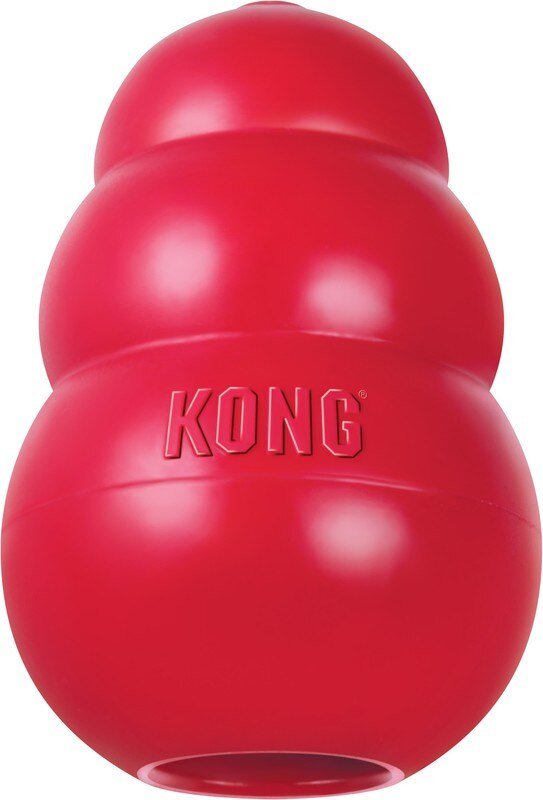
KONG
A highly versatile rubber toy that can hold food, bounce unpredictably, and provide a safer outlet for chewing when correctly sized.
What we like
- Versatile stuffing cavity
- Unpredictable bounce
- Multiple sizes and rubber strengths
- Easy to incorporate into routines
What to consider
- No toy is indestructible
- Needs regular cleaning and inspection
Product snapshot
| Material | Natural rubber line varies by model |
|---|---|
| Use | Chewing, fetch, and food enrichment |
| Sizing | Choose by dog size and chewing style |
| Care | Wash thoroughly after food use |
Why the KONG Classic remains useful
The hollow center can be filled with part of a dog’s normal meal, soft food, or suitable treats. Freezing a filled toy can extend the activity, while the irregular shape creates unpredictable movement during play.
Choose the correct version
KONG offers different sizes and rubber formulas. Use the latest manufacturer guide and choose a toy that cannot pass behind the dog’s rear teeth or become lodged in the mouth. Strong chewers may need a tougher line, while puppies and senior dogs may need a more forgiving formula.
Cleaning and inspection
Food residue can collect inside the cavity. Soak and scrub it after use, then let it dry fully. Replace the toy if chunks are missing, cracks deepen, or the opening becomes damaged.
Enrichment tip
Begin with loosely packed, easy-to-remove food so the dog learns how the toy works. Increase difficulty gradually. Enrichment should reduce frustration, not create an impossible puzzle.
KONG Classic Dog Toy FAQs
Which KONG Classic size is safest?
Choose the current manufacturer size for the dog’s weight and jaw size, then supervise the first sessions. The toy should be too large to swallow and should be removed if pieces begin to separate.
Can the KONG Classic be stuffed and frozen?
Many owners use food-safe fillings and freezing for longer enrichment. Use foods appropriate for the individual dog and count the filling as part of daily calories.
Is it indestructible?
No toy is indestructible. Inspect the rubber before every use and replace the toy when cracks, missing pieces, or excessive wear appear.
Research transparency
Research-based editorial review using the linked manufacturer or retailer reference. Product specifications, seller details, prices, and availability can change; confirm the exact current listing before purchase.
Last fact-check date: 2026-08-01
View the manufacturer research source
We do not claim hands-on testing unless the page identifies the tester, pet, test period, method, and original evidence.
Community experience