
Automatic feeders can support regular routines, but they should be evaluated as food-contact appliances with possible failure points, not as replacements for human care.
Food compatibility
Check the manufacturer’s kibble-size guidance and whether the feeder is designed for dry, semi-moist, or wet food. Oils and irregular shapes can affect dispensing.
Measure actual portions
Run several portions using the pet’s exact food and weigh them. “One portion” is not a universal gram amount. Recheck after changing kibble.
Plan for failures
Test battery backup, power recovery, jam alerts, low-food alerts, and what happens when Wi-Fi is unavailable. A trusted person should still check the pet during travel.
Smart features and privacy
For camera models, use a strong password, install updates, and aim the camera only at the feeding area. Compare subscription requirements and whether core scheduling works without a paid plan.
Medical feeding
Pets with diabetes, prescription diets, poor appetite, or swallowing problems need a veterinarian-approved plan and may require direct supervision.
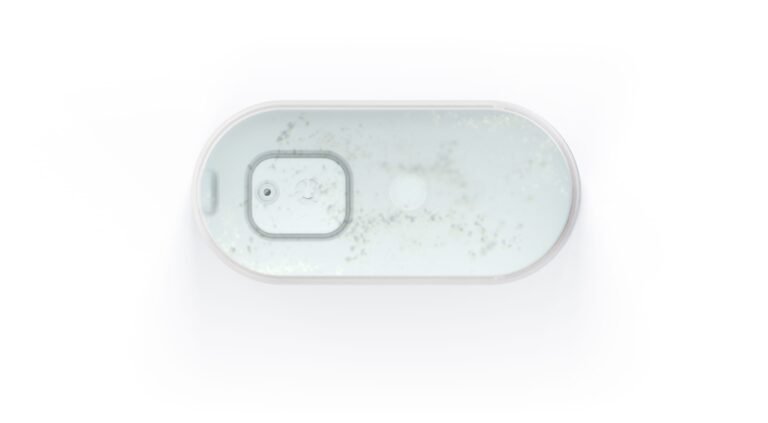
Petcube Fountain
Petcube Fountain gets the fundamentals mostly right: filtered moving water, a removable easy-care upper surface, and the ability to function…
Best for: Single-cat or small-pet homes that want a compact fountain that can keep working without a permanent Wi-Fi connection and can be placed away from an outlet for periods
Read the review →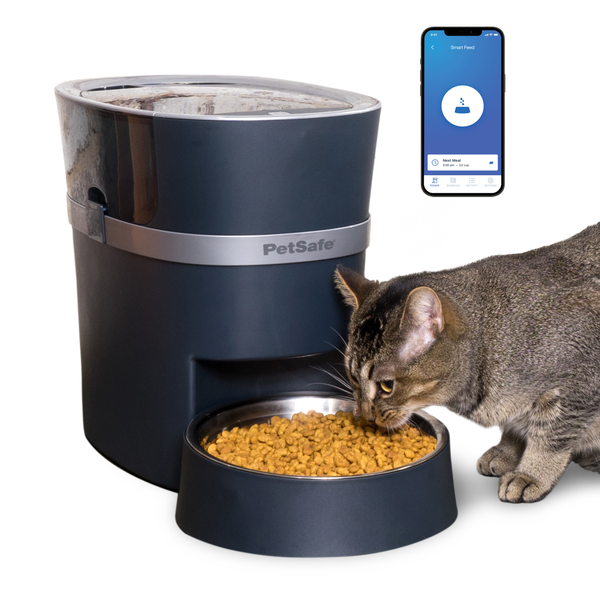
PetSafe Smart Feed Automatic Pet Feeder, 2nd Generation
Smart Feed 2nd Generation remains a strong dry-food automation choice because the core feeding controls are practical: 24 cups, 12…
Best for: Cats and small-to-medium dogs eating dry or compatible semi-moist food where owners want precise schedules, large hopper capacity, and app monitoring
Read the review →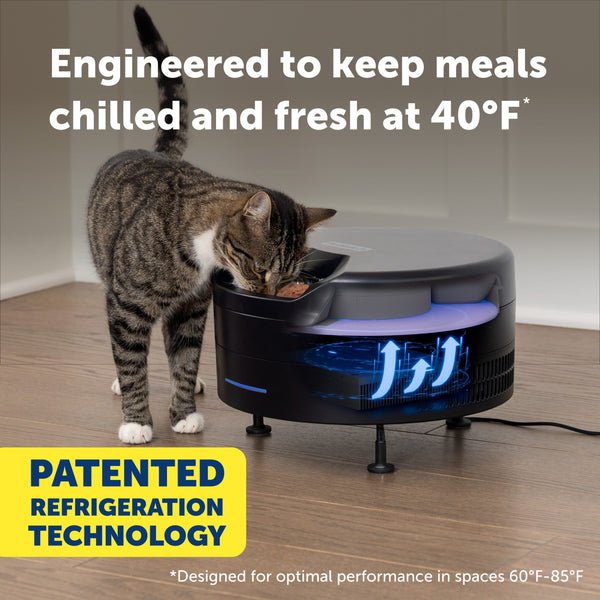
PetSafe FreshFeed Refrigerated Pet Feeder
FreshFeed is the more refrigerator-like choice in this batch: PetSafe specifies a 40°F target and gives owners six pre-portioned meals…
Best for: Cats and small dogs that eat wet, fresh, or properly handled raw diets and need several pre-portioned meals served on a reliable schedule
Read the review →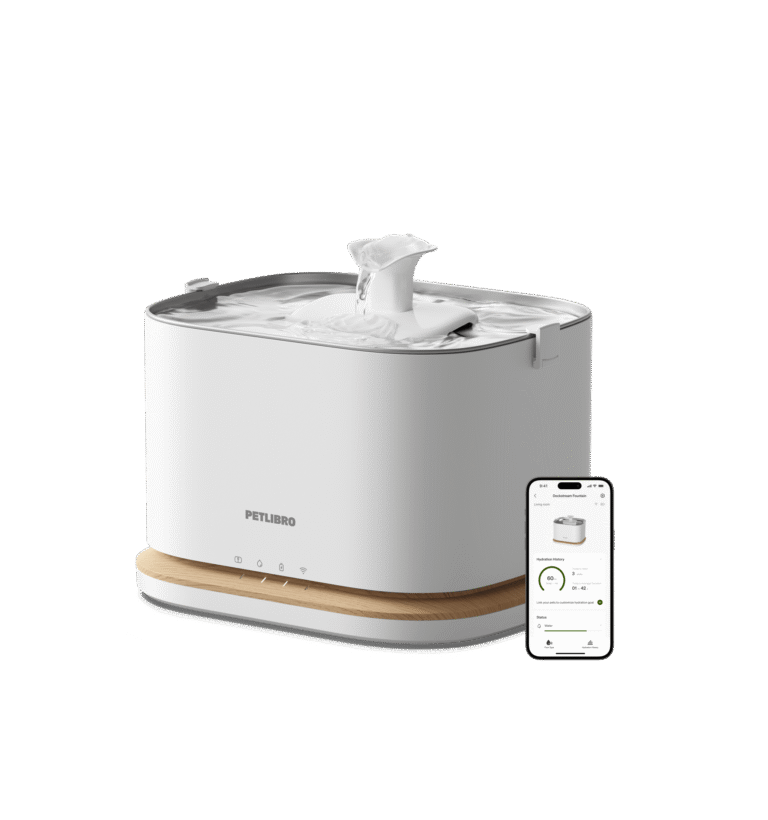
PETLIBRO Dockstream RFID Smart Fountain
Dockstream RFID adds something most smart fountains cannot: it can attribute drinking sessions to individual cats. That is genuinely useful…
Best for: Multi-cat homes where owners want to distinguish which tagged cat is drinking and spot changes in each cat’s water-consumption pattern
Read the review →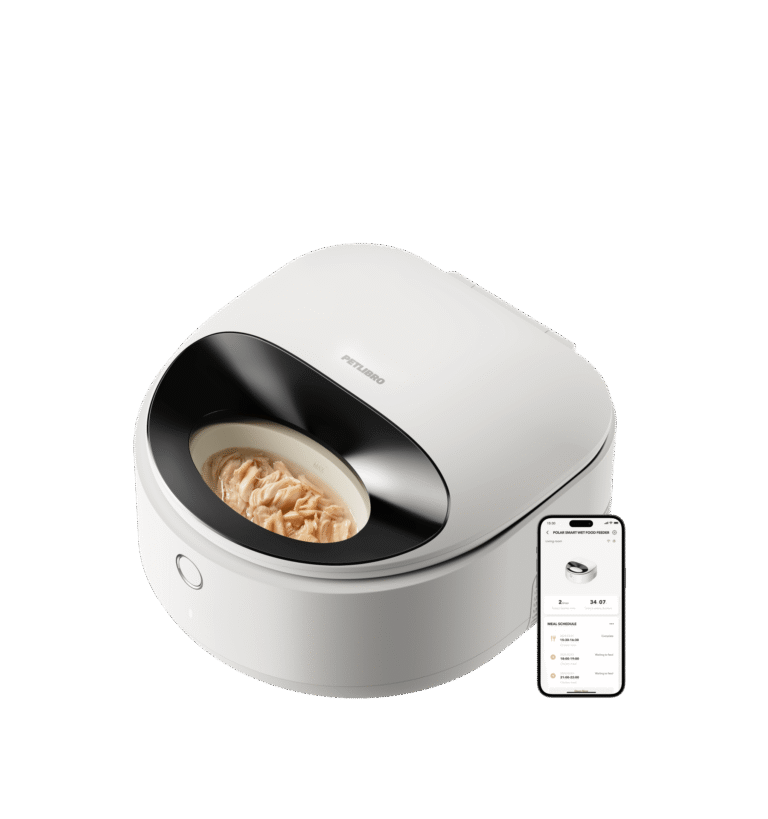
PETLIBRO Polar Smart Wet Food Feeder
Polar is one of the more useful automatic feeders for cats that actually eat wet food: it actively cools three…
Best for: Adult cats on commercial wet or fresh-style diets whose owners need three scheduled meals with active cooling between servings
Read the review →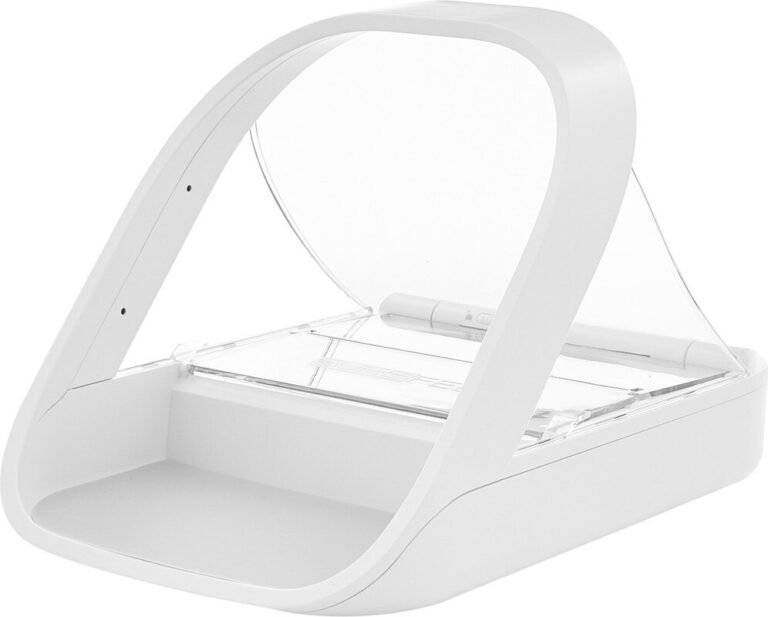
SureFeed Microchip Pet Feeder
A selective-access feeder that opens for a registered pet, helping separate diets and reduce food stealing in multi-pet homes.
Best for: Multi-pet homes separating diets or preventing food stealing
Read the review →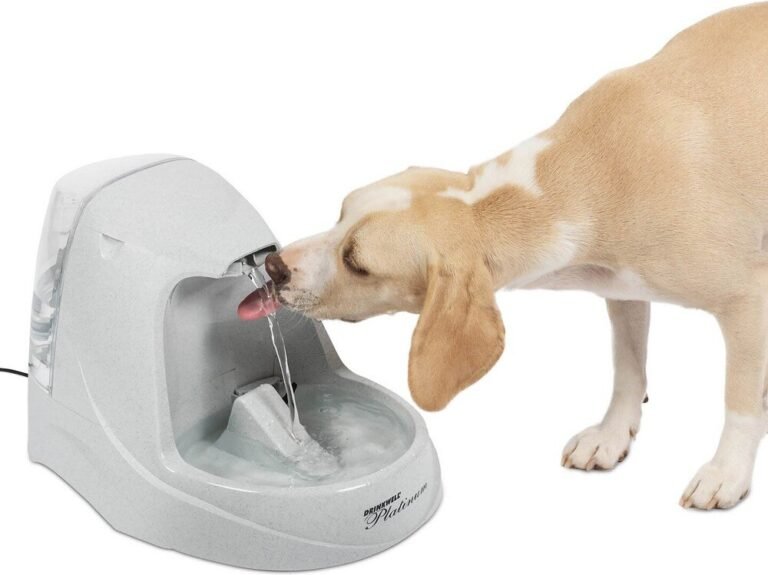
PetSafe Drinkwell Platinum Pet Fountain
A high-capacity flowing-water fountain with a built-in reservoir, designed to make fresh water more appealing to dogs and cats.
Best for: Pets attracted to flowing water and homes able to clean the fountain routinely
Read the review →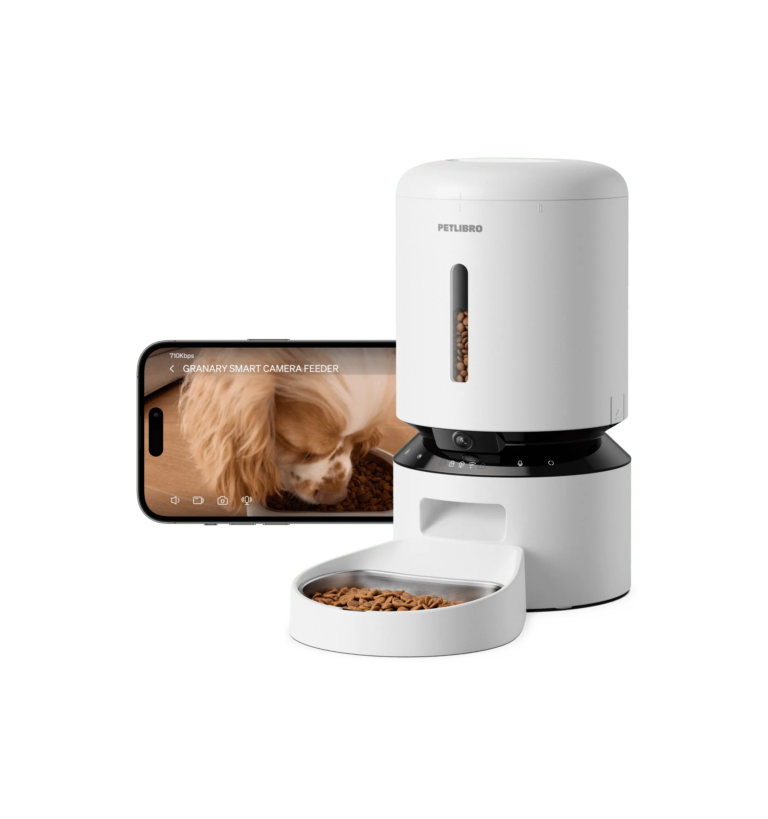
PETLIBRO Granary Smart Camera Feeder
A connected dry-food feeder that combines scheduled portions with camera monitoring on the selected Granary camera model.
Best for: Scheduled dry-food meals with remote visual checks
Read the review →Questions readers ask
How accurate are automatic portions?
Accuracy varies with kibble shape, size and the mechanism. Test multiple cycles with the exact food before relying on the schedule.
Should a feeder be used for medication?
Only with professional guidance and a reliable backup plan; missed or incorrect doses can be serious.
Is a camera necessary?
No, but it can help confirm that food dispensed and which pet approached the bowl.