
Petcube GPS Tracker
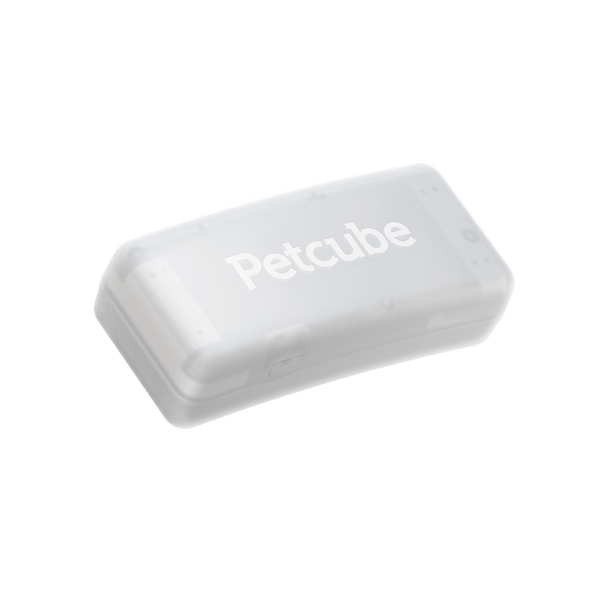
Petcube
Petcube’s GPS Tracker is small, straightforward, and competitively positioned for owners who want cellular location tracking without buying an integrated smart collar. Its most important limitation is not the hardware price but the required service plan—and the current official page should resolve its own contradictory IP67/IP68 wording.
What we like
- 29 g compact tracker
- Real-time GPS and virtual fences
- Location history and activity/wellness tracking
- Built-in light and buzzer
- Glow-in-the-dark silicone attachment
- Up to 30 days battery in Power Save Zone mode
What to consider
- Paid subscription required
- 30-day battery claim depends on Power Save Zone use
- Current Petcube page contains conflicting IP67/IP68 wording
- Requires LTE coverage; Wi-Fi is used for Power Saving Zones
- Tracker must be removed from silicone pocket for charging
Product snapshot
| Dimensions | 60 × 25 × 20 mm / 2.3 × 0.9 × 0.7 in |
|---|---|
| Weight | 29 g |
| Tracking | GPS with LTE cellular service |
| Battery | up to 30 days with Power Save Zone enabled |
| Connectivity/setup | 2.4 GHz Wi-Fi; LTE availability required |
| Phone support | iOS 14+ and Android 7.1.2+ |
| Features | live location, lost-pet mode, virtual fences, location history, activity goals, LED and buzzer |
| Attachment | flexible glow-in-the-dark silicone case |
| Subscription | required |
| Ingress protection | Petcube’s current page shows IP67 in the feature summary and IP68 in the technical-spec text; verify current certification before relying on either rating |
A compact cellular tracker with familiar safety tools
Petcube GPS Tracker covers the core feature set expected from a modern dog tracker: real-time location, virtual fences, escape notifications, location history, activity/wellness data, and close-range light and sound. The hardware measures 60 × 25 × 20 mm and weighs 29 grams, making it lighter than many full-size cellular trackers.
The glow-in-the-dark silicone case loops around a collar or harness. That universal attachment is convenient, but it is still worth checking that the tracker cannot rotate under the dog’s neck, rub the skin, or interfere with leash hardware.
The subscription is part of the device
Petcube requires a paid plan because the tracker sends location data over cellular networks. The company currently offers plan lengths and feature tiers, and those prices can change. For an evergreen review, the important comparison is total ownership cost: hardware plus the plan the household realistically intends to keep.
LTE availability is a requirement. A tracker can have excellent GPS reception and still fail to report promptly if the mobile network cannot carry the data. Anyone who hikes or lives near coverage gaps should compare carrier coverage in the actual places the dog visits.
Battery claims depend heavily on Power Save Zones
Petcube advertises up to 30 days with Power Save Zone enabled. Power-saving modes are designed for known Wi-Fi locations where the device can reduce cellular/GPS activity. A lost-dog event is the opposite workload: frequent updates consume substantially more energy.
So the 30-day headline is useful as an upper-end home-use figure, not a promise that a missing dog can be tracked continuously for a month. Owners should recharge well before the battery becomes low enough to undermine an emergency search.
There is an official IP-rating inconsistency worth preserving
Petcube’s current product page is internally inconsistent: the top feature summary says IP67, while the technical-spec section says waterproof IP68. Rather than silently choosing whichever rating sounds better, The Vital Pup should state the conflict and tell readers to verify the current certification before relying on the tracker for extended water exposure.
That is a small editorial detail but an important trust signal. Water-resistance ratings have specific test meanings; combining two different ratings as if they are interchangeable is not useful to a buyer.
Light, buzzer, and location history add practical value
Once the map gets an owner close, the LED and buzzer can help locate a dog in darkness, vegetation, or a crowded yard. Location history can show the route the dog took and may reveal repeat escape patterns around a particular gate or fence line.
Activity information is useful as a trend, not as a medical measurement. Calorie estimates and activity goals can help owners notice routine changes, but diet adjustment for weight or disease should be based on veterinary guidance rather than a wearable alone.
Petcube versus Tractive
Petcube is lighter on paper and advertises a longer low-power maximum, while Tractive DOG 6 has a more mature tracker-focused product family and a strong live-tracking/health feature set. Both require subscriptions. The better choice is the one whose plan, coverage, battery routine, app experience, and attachment format fit the dog’s daily life—not simply the one with the largest advertised battery number.
Petcube GPS Tracker FAQs
Does Petcube GPS Tracker need a subscription?
Yes. Petcube requires a paid plan because the tracker uses cellular networks to transmit live location data.
How much does it weigh?
Petcube lists the tracker at 29 g.
Does it really last 30 days?
Petcube says up to 30 days with a Power Save Zone enabled. Frequent live tracking and time away from power-saving conditions shorten battery life.
Is it IP67 or IP68?
Petcube’s current official product page is inconsistent: the feature summary says IP67 while the technical specs say IP68. Verify the current certification with Petcube before relying on a specific immersion rating.
Related reviews and buying guides
Category hub
Browse all Smart Pet Tech reviews →Related products
Community experience