
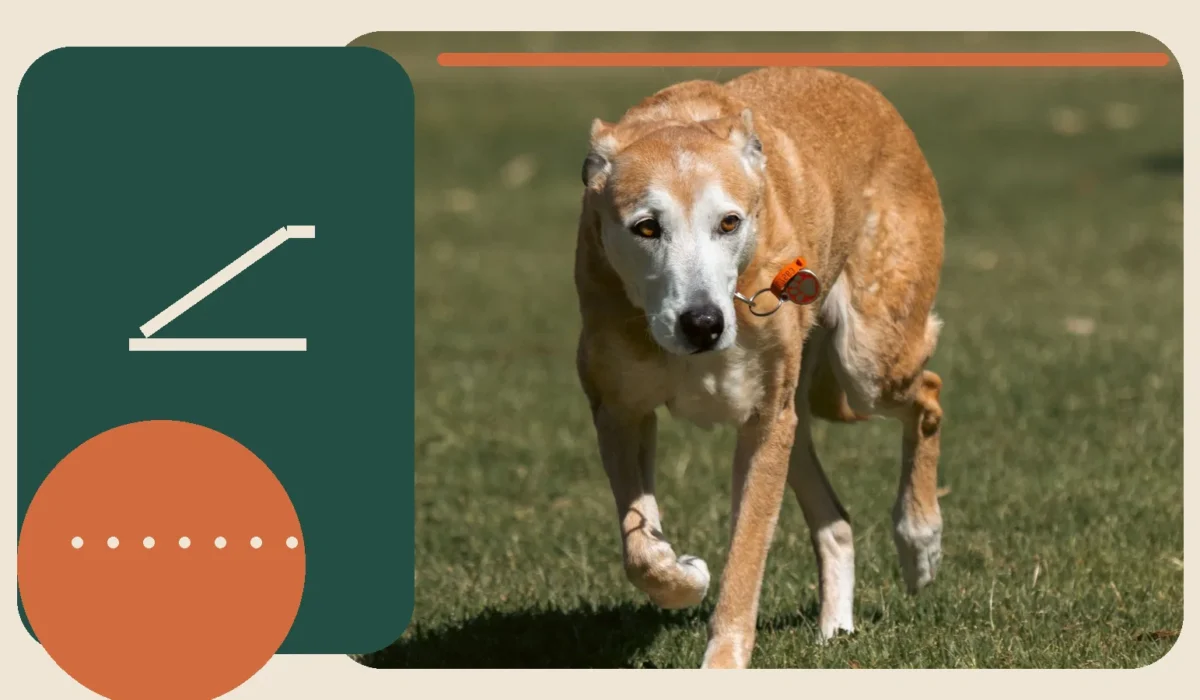
A ramp that is too short for the height can be as difficult as a jump. Measure the vertical loading height and compare it with the usable ramp length.
Reduce the slope
Longer ramps generally create a gentler angle. Confirm that the ramp fits the vehicle or furniture and can be seated securely without sliding.
Start flat
Place the ramp on the floor and reward the dog for looking at it, placing paws on it, and walking across. Increase the incline gradually. Never drag a frightened dog up the ramp.
Check traction and stability
Use the ramp on level ground, keep the surface dry, and stay beside the dog. A well-fitted harness can provide guidance without pressure on the neck.
Professional guidance
Dogs recovering from surgery or showing weakness should follow veterinary rehabilitation advice. Caregivers should also avoid unsafe lifting that risks their own back.
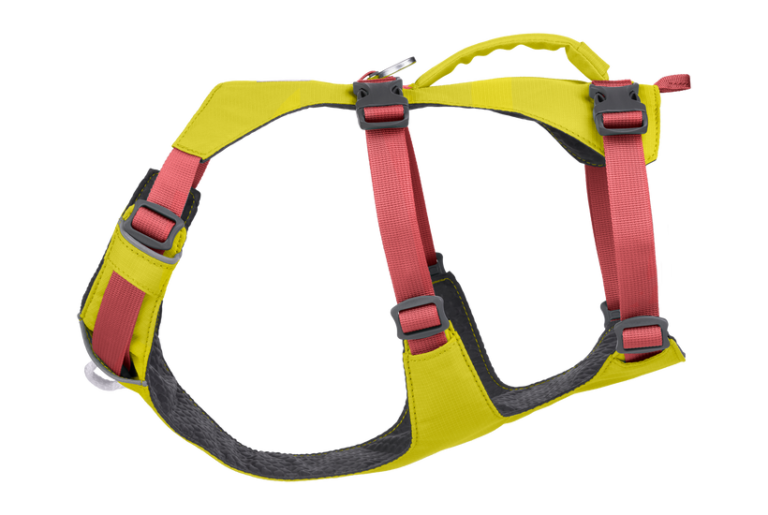
Ruffwear Flagline Harness with Handle
Flagline works particularly well when a dog mostly walks normally but occasionally needs a boost over stairs, into vehicles or…
Best for: Dogs that need occasional lift assistance on stairs, vehicles or rough terrain without wearing a bulky full-support sling
Read the review →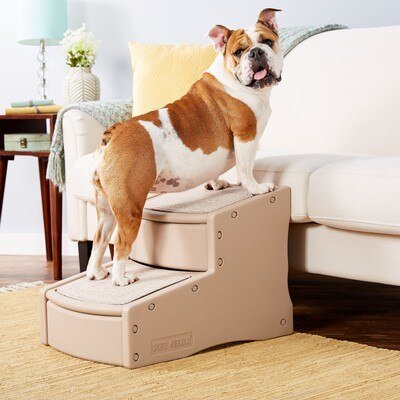
Pet Gear Easy Step II Pet Stairs
Easy Step II is better than narrow pet stairs for animals that need their whole body supported on each step.…
Best for: Small, senior or mobility-limited pets needing a wider two-step route onto furniture
Read the review →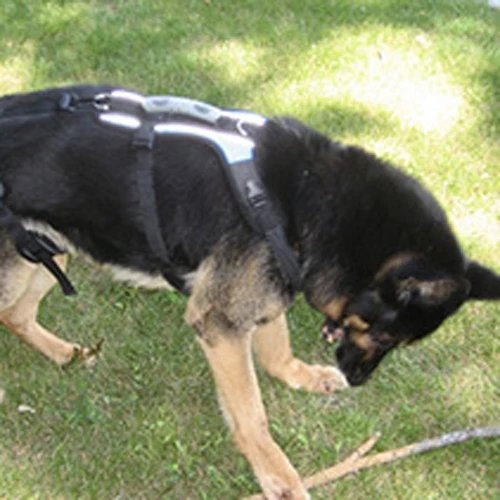
Help ’Em Up Mobility Harness
A full-body support harness designed to help caregivers assist dogs with balance, rising, stairs, toileting, and vehicle access.
Best for: Dogs needing controlled front, rear, or full-body assistance
Read the review →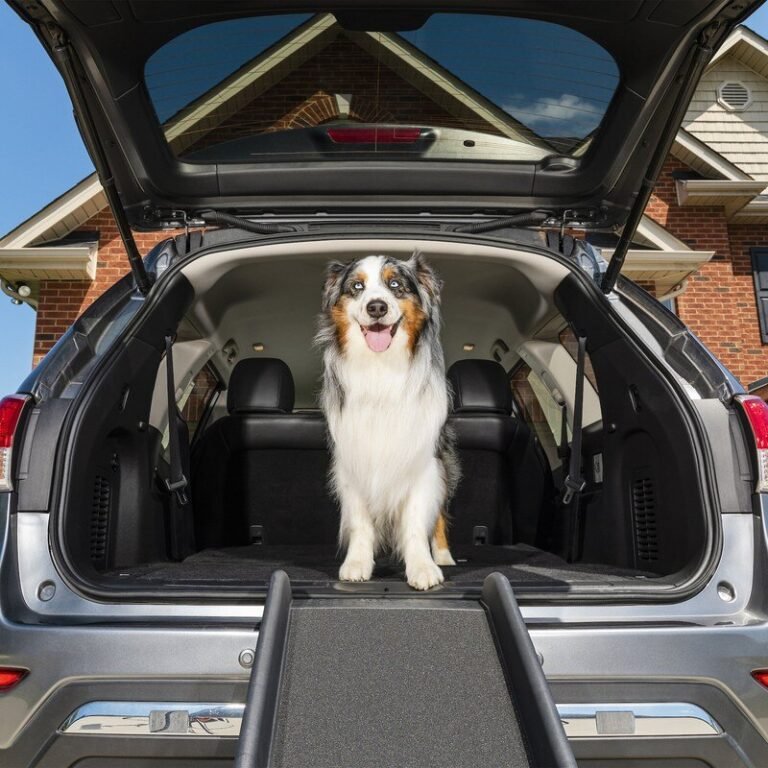
PetSafe Happy Ride Folding Pet Ramp
A portable folding ramp that can reduce repeated jumping into a vehicle when the angle, traction, and load rating are…
Best for: Dogs needing help entering compatible cars and SUVs
Read the review →Questions readers ask
Should ramp training start at the vehicle?
No. Begin flat on stable ground, then increase height gradually.
What surface gives better confidence?
A dry, non-slip surface with secure footing and stable support.
What if the dog freezes or jumps off?
Reduce the difficulty, reward smaller steps and seek professional help when pain or fear is involved.